
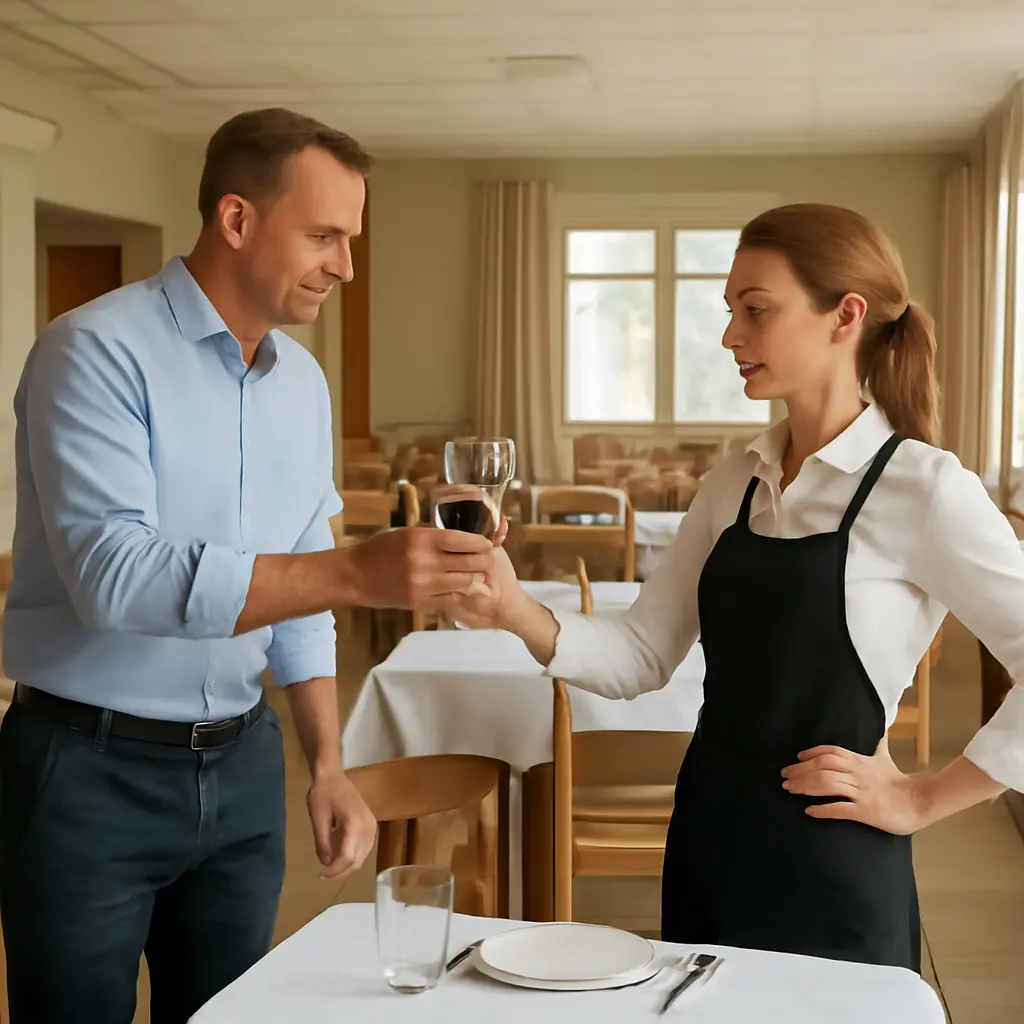
Wine-pairing confidence is a restaurant team’s ability to recommend wines that complement a guest’s meal, preferences, and budget without making the choice feel intimidating. Managers can build that confidence quickly by teaching a simple taste vocabulary, matching wine weight and acidity to food, offering a few clear options, using guest-friendly questions, and practicing through brief pre-service tastings. These habits make recommendations more useful and inclusive: the National Restaurant Association’s 2024 State of the Restaurant Industry report identifies beverage sales and guest experience as important parts of restaurant performance, while wine education organizations such as Wine & Spirit Education Trust (WSET) emphasize that structured tasting and food-pairing principles can be learned rather than left to instinct.
Build wine-pairing confidence through practical restaurant training
Wine pairing is the practice of selecting or recommending a wine in relation to a dish, with the aim of creating a satisfying combination for a particular guest. WSET’s food-and-wine guidance describes pairing in terms of how a wine’s characteristics interact with a dish’s flavors and structure; it does not require one “correct” bottle for every plate. In service, a confident recommendation is therefore both informed and flexible: staff explain why a wine may work, then adapt to what the guest enjoys.
The most useful quick wins are repeatable service behaviors, not lengthy lectures. They help servers explain wine in everyday language, identify a few reliable pairing routes, and make recommendations that respect price and preference. The five practices below can be taught in short training sessions and reinforced during pre-shift meetings.
Quick win 1: Teach a small, usable taste vocabulary
A taste vocabulary gives staff a shared way to describe wine and food. Start with a manageable set of terms: light-bodied or full-bodied, crisp or soft, dry or sweet, and high-acid or low-acid. Add common flavor descriptions such as citrus, red fruit, black fruit, herbs, and oak only when they help a guest picture the wine.
The goal is clarity, not performance. Instead of reciting technical notes, a server might say, “This Sauvignon Blanc is bright and citrusy, so it’s a good choice if you’d like something refreshing with the oysters.” WSET’s systematic tasting approach separates observations such as sweetness, acidity, tannin, body, and flavor intensity. Using a few of those concepts consistently helps a team communicate accurately without overwhelming diners.
Quick win 2: Match weight and intensity before chasing exact flavors
Wine weight refers to how substantial a wine feels, while dish intensity describes how powerful the food’s flavors are. A practical first rule is to pair lighter dishes with lighter wines and richer dishes with wines that have enough body or flavor intensity to hold their own. This is a starting point rather than a rigid rule: a guest’s preference should always be allowed to override a textbook match.
For example, a delicate white fish may suit a light-bodied white, while a richly braised short rib can stand up to a fuller-bodied red. But sauce, seasoning, and cooking method matter: a grilled fish with a bold spice rub may call for a more aromatic wine than a simply poached fillet. Training staff to ask, “Is the dish delicate, rich, or strongly seasoned?” makes the principle easy to apply at the table.
Quick win 3: Use acidity, sweetness, and tannin as pairing shortcuts
Acidity, sweetness, and tannin are three wine characteristics that can help staff make more specific recommendations. Crisp, high-acid wines can feel refreshing alongside fatty or rich foods; a wine with some sweetness can soften the impression of heat in spicy dishes; and tannic reds often work well with protein-rich foods, though their bitterness and astringency may become more noticeable with certain preparations.
These are useful tendencies, not guarantees. A sweet wine may be an enjoyable contrast to salty cheese, while a sharp acidic wine can complement a dish with bright citrus or tomato. WSET’s pairing principles encourage considering the dominant elements of both food and wine, including sweetness, acidity, bitterness, and intensity. Managers can turn that guidance into a quick drill: name one feature of the dish, then explain which wine feature might complement or balance it.
Quick win 4: Offer two or three choices at clear price points
A short, structured choice reduces pressure for both the guest and the server. Rather than asking an open-ended “What wine would you like?”, offer two or three options that differ in style and price, and briefly explain the reason for each. For example: “Would you prefer a crisp white, a fuller white, or a light red with the salmon?” If the guest has shared a budget, keep the options within it and make the price clear.
This approach also helps staff avoid treating premium wine as the default recommendation. The National Restaurant Association’s consumer research regularly examines dining choices and value expectations, underscoring why recommendations should respond to the individual occasion rather than assume a single spending level. Managers can support transparent service by ensuring staff know the by-the-glass list, bottle prices, pour sizes, and which wines are available in half-bottles or tasting pours.
Quick win 5: Make pre-shift tasting short, social, and repeatable
A pre-shift tasting is a brief, guided opportunity for staff to taste a wine, describe it in their own words, and connect it to a menu item. A five-minute session can cover the wine’s grape or region, one or two sensory characteristics, a likely pairing, and a guest-friendly description. Repetition matters more than a large amount of information delivered at once.
Managers can invite staff to compare impressions rather than require everyone to use identical tasting notes. That makes training less intimidating and helps servers speak naturally. For responsible service, tastings should be small, controlled, and consistent with workplace policy and local alcohol regulations; participation should never be treated as a substitute for formal training where required.
Turn pairing knowledge into guest-centered recommendations
The five quick wins work best when paired with a simple conversation. Staff can ask what the guest is ordering, whether they prefer red or white, and whether they want something crisp, rich, or easy-drinking. One or two questions are usually enough to narrow the choices without making the interaction feel like an exam.
A useful recommendation has three parts: a clear option, a brief reason, and room for the guest to decide. For example: “If you enjoy lighter reds, the Pinot Noir is a good match for the mushroom pasta because it has enough savory character without overpowering the dish. Would you like to hear a less expensive option as well?” This format connects wine knowledge to the meal while keeping the guest in control.
Use the menu as the team’s pairing reference
A concise pairing guide can list each featured wine’s style, key taste terms, price, and one or two menu matches. It should also flag dishes with strong heat, sweetness, acidity, or richness, since these qualities can influence a pairing. Keep the guide current when the menu or wine list changes, and make sure staff can explain alternatives for guests who avoid alcohol.
Managers can assess whether the training is working by tracking practical indicators such as staff participation in tastings, guest feedback, wine-by-the-glass sales, and the frequency of pairing suggestions. These measures do not prove that one training method caused a sales change, but they help identify whether staff are using the tools and where additional coaching may be useful. A simple observation checklist can also assess whether recommendations are clear, price-aware, and responsive to guest preferences.
Conclusion: Make wine-pairing confidence a daily service habit
Restaurant managers can improve wine-pairing confidence without turning service into a technical lesson. Give teams a small taste vocabulary, teach weight and intensity, explain acidity, sweetness, and tannin as practical clues, offer a few transparent choices, and reinforce learning through short pre-shift tastings. Together, these habits make recommendations easier to deliver and easier for guests to trust.
Start with one quick win at the next pre-shift meeting, then build a simple menu-and-wine guide and invite staff to practice guest-friendly explanations. For further learning, consult WSET’s food-and-wine pairing materials and the National Restaurant Association’s industry research, while following local requirements for responsible alcohol service.
Sources: Wine & Spirit Education Trust (WSET), Food and Wine Pairing, https://www.wsetglobal.com/; Wine & Spirit Education Trust (WSET), Systematic Approach to Tasting, https://www.wsetglobal.com/; National Restaurant Association, 2024 State of the Restaurant Industry Report, https://restaurant.org/research-and-media/research/research-reports/state-of-the-restaurant-industry/


