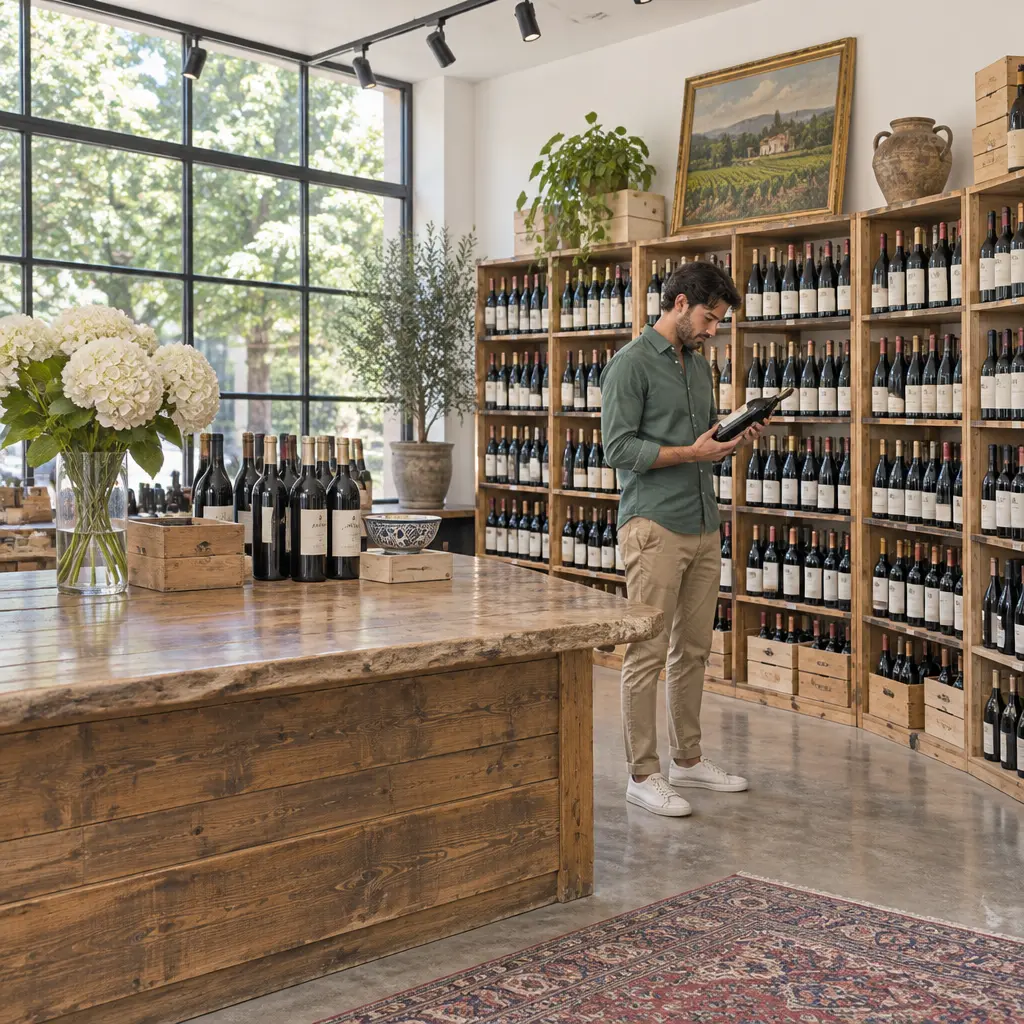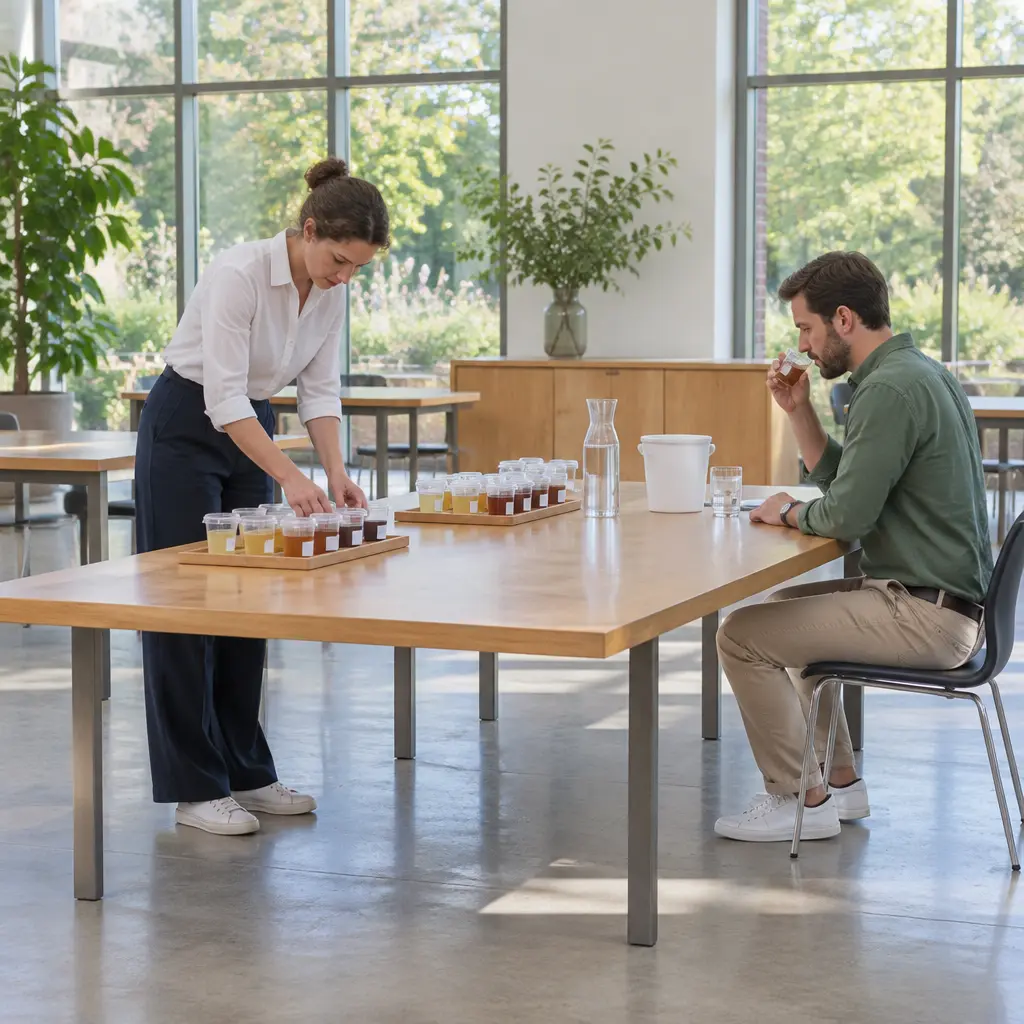
Blind tasting is a sensory-evaluation method in which identifying information—such as a product’s brand, price, or maker—is concealed while people assess what they experience. Blind tasting protocols remove some expectation-driven cues, helping researchers and businesses distinguish sensory preference from brand and price effects. They cannot eliminate every source of bias: serving order, sample preparation, participant expectations, and statistical design still matter. Evidence from wine studies and sensory-science guidance shows why protocols should use controlled serving, randomized order, clear questions, and appropriate analysis. The sections below explain the method’s foundations, protocol types, design choices, practical applications, limitations, and steps for interpreting results.
Blind tasting protocols and preference measurement
A blind tasting protocol is a predefined procedure for presenting products without revealing selected identifying attributes and recording participants’ sensory judgments. Its purpose is not to prove that one product is universally “best,” but to reduce information that could shape a response before or during tasting. Depending on the research question, blinding may conceal brand, price, origin, formulation, or all of these.
The method is relevant wherever sensory experience and reputation may diverge: food and drink, fragrance, cosmetics, consumer products, and product development. In a widely cited 2008 study, researchers Robin Goldstein, Johan Almenberg, Anna Dreber, John Emerson, Alexis Herschkowitsch, and Jacob Katz analyzed 6,000 blind wine-tasting ratings and found that the relationship between price and reported quality was small and slightly negative. When prices were visible, however, the price–quality relationship became positive and statistically significant. The study illustrates that context can influence judgments; it does not establish that price never tracks quality or that every tasting will produce the same result.
Blind tasting protocols define controlled preference measurement
Sensory scientist Herbert Stone and co-authors describe sensory evaluation as a scientific discipline used to evoke, measure, analyze, and interpret reactions to product characteristics as perceived through the senses. A blind tasting protocol applies that discipline by controlling what participants know and how samples are served, then measuring responses with a planned method. Its defining attributes include concealed product identity, standardized presentation, a specified evaluation task, and a documented analysis plan.
Protocols can be grouped by what they measure. Discrimination tests ask whether people can detect a difference; descriptive analysis characterizes sensory attributes; and affective or consumer tests measure liking, preference, or acceptance. These categories are related but not interchangeable: a detectable difference does not necessarily mean consumers prefer one sample.
Discrimination tests: detecting whether samples differ
A discrimination test determines whether assessors can distinguish products under specified conditions, without necessarily asking which is liked more. A common example is the triangle test: each participant receives three coded samples, two alike and one different, and identifies the odd sample. The International Organization for Standardization’s ISO 4120 standard specifies procedures for this test, including sample presentation and statistical evaluation.
Chance performance matters. In a triangle test with three possible choices, a participant guessing randomly has a one-in-three probability of selecting the odd sample. Researchers therefore assess the number of correct responses across the group against a statistical criterion; one correct answer alone does not demonstrate a reliable difference. This test is useful for checking whether a recipe change, packaging effect, or storage condition creates a perceptible difference, but it does not establish preference.
Descriptive analysis: characterizing sensory attributes
Descriptive analysis uses trained assessors to identify and rate attributes such as aroma, sweetness, bitterness, texture, or aftertaste. Unlike a consumer liking test, it aims to produce a structured sensory profile rather than a popularity ranking. Training helps align assessors’ use of attribute definitions and rating scales, while coded samples reduce the influence of product identity.
A descriptive profile can help explain why two products differ, but it should not be presented as proof that consumers will prefer one. For example, a trained panel might find that a beverage is more bitter and has a longer finish; a separate consumer test is needed to determine whether those attributes increase or reduce liking among the target audience.
Affective tests: measuring liking and preference
Affective tests ask consumers to report liking, acceptance, or preference. They may use a rating scale for each sample or a forced-choice question asking which sample is preferred. The International Organization for Standardization’s ISO 11136 provides guidance on hedonic testing with consumers in a controlled area.
These tests address different questions: “How much do you like each sample?” measures liking, whereas “Which do you prefer?” requires a comparative choice. Researchers should recruit people who represent the intended market and report the sample size, scale, recruitment method, and uncertainty. A preference percentage without those details can be misleading because small or unrepresentative panels may not predict a wider population.
Blind tasting design controls expectation and order effects
Once the test type is chosen, the protocol must control how samples reach the participant. Blinding is not simply removing a label: researchers also need to consider serving order, portion size, temperature, preparation, palate fatigue, and the environment. Sensory methods guidance from the Institute of Food Technologists emphasizes controlled conditions and consistent procedures so that observed differences can be attributed more plausibly to the products rather than avoidable variation.
Concealing identity without creating new cues
Samples are commonly labeled with random three-digit codes, and packaging or visual features that reveal brand or price are concealed when they are not part of the research question. Instructions should be neutral, avoiding language that suggests a sample is premium, improved, or expected to win. Researchers should define the level of blinding in advance: a test may hide brand while leaving appearance visible, or it may also use opaque cups when color is irrelevant.
Blinding has limits. Participants may recognize a familiar product from its flavor, texture, or distinctive packaging cues, and staff who know sample identities can unintentionally communicate expectations. A strong protocol minimizes these risks by separating sample preparation from administration where feasible and documenting any instance in which identity may have become apparent.
Randomized serving order and counterbalancing
Randomization varies the order in which samples are served so that a product does not consistently benefit from being tasted first or last. Counterbalancing distributes products across positions more evenly. These measures address order effects, including contrast with a preceding sample, sensory adaptation, and fatigue.
The choice of design depends on the number of samples and participants. With many samples, researchers may use balanced incomplete blocks so each person evaluates only a manageable subset while comparisons remain distributed across the panel. The plan should also include palate-cleansing intervals where appropriate and consistent instructions for retasting.
Standardized preparation and serving conditions
Standardization means preparing and serving samples in the same way, including controlling portions, containers, temperature, timing, and relevant storage conditions. For products whose sensory properties change quickly, preparation-to-serving time can be critical. Researchers should record deviations because a seemingly minor difference—such as serving one beverage warmer than another—may affect perception.
The appropriate controls depend on the question. If consumers normally encounter a product in its branded package, packaging may be part of the experience and should not automatically be hidden. If the purpose is to compare flavor alone, masking visual brand cues is more appropriate. The protocol should make that distinction explicit.
Blind tasting results require careful interpretation
A well-run blind test improves the credibility of a comparison, but it does not turn a sample into a universal verdict. Results apply to the tested participants, products, conditions, and questions. Interpretation should distinguish statistical evidence from practical importance and should report uncertainty rather than relying only on a winning percentage or average score.
Preference is not the same as sensory difference
A discrimination test can show that samples are perceptibly different, while a consumer test can show which one a particular group likes more. The two findings can diverge: consumers may detect a difference yet show no consistent preference, or they may prefer one sample even when a simple discrimination test does not find reliable group-level detection. Matching the test to the research question prevents overclaiming.
Blind and branded tests answer complementary questions
A blind test estimates responses when identity cues are withheld; a branded or informed test estimates responses in a context where those cues are available. Neither is automatically the “real” preference. The blind condition can isolate sensory response, while the informed condition can capture the combined value of taste, reputation, packaging, price, and familiarity.
The 2008 wine study by Goldstein and colleagues is a notable real-world example of this distinction: price information was associated with different rating patterns than blind evaluation. A practical study can therefore compare blind and informed conditions, ideally using a design that limits carryover between them. Reporting both conditions helps businesses understand whether a product’s appeal comes from sensory qualities, market signals, or their interaction.
Panel recruitment, sample size, and analysis shape confidence
A panel’s composition determines whose preferences are represented. Trained assessors are suited to descriptive profiling, while target consumers are generally needed for market-liking questions. Age, usage habits, dietary restrictions, geography, and familiarity may matter, depending on the product and intended audience.
Sample size should be selected for the expected effect, test design, and desired precision rather than chosen by convenience alone. The analysis plan should specify the primary outcome, comparison, treatment of missing responses, and statistical method before results are inspected. Where several products or outcomes are tested, researchers should also address the increased chance of finding an apparently significant result by coincidence.
Blind tasting applications improve product decisions
Organizations use blind tasting to compare reformulations, evaluate suppliers, test quality consistency, and explore consumer response without letting brand reputation dominate the initial sensory comparison. It is also useful in education and public demonstrations, provided the presenter does not treat a small informal tasting as representative research.
Food and beverage development
A food manufacturer can use a triangle test to determine whether a reduced-sugar recipe is detectably different, then use a consumer hedonic test to assess whether the target audience likes it. If the new formula is distinguishable but equally liked, the business learns something different than if it is distinguishable and less accepted. Keeping those stages separate supports clearer formulation decisions.
Wine, price, and reputation
Wine tasting illustrates how sensory judgment can interact with market information. Goldstein and colleagues’ 2008 analysis of 6,000 blind ratings found a small, slightly negative association between price and quality ratings under blind conditions, while price-visible ratings showed a positive association. This finding is evidence that disclosed price can shape reported evaluation in that dataset; it is not a claim that all expensive wines are poor or all low-priced wines are superior.
Public comparisons and consumer education
Blind comparisons can prompt people to reconsider assumptions about familiar brands or premium products. For an informal event, organizers can use coded samples, randomize the sequence, provide water or neutral palate cleansers, and disclose the limitations afterward. Such demonstrations are engaging, but their results should not be generalized to a population unless recruitment and testing were designed for that purpose.
Conclusion: blind tasting protocols reveal conditional preference patterns
Blind tasting protocols reduce the influence of selected identity cues, but their value depends on matching the method to the question. Discrimination tests establish whether samples can be distinguished; descriptive analysis characterizes sensory attributes; and affective tests measure consumer liking or preference. Randomized order, standardized serving, suitable recruitment, and transparent analysis strengthen the evidence, while comparison with an informed condition can show how brand and price alter responses.
For researchers, product teams, and consumers, the key lesson is to treat blind results as evidence about a defined context—not as a final ranking of objective worth. Before conducting a tasting, specify what information will be concealed, who the findings should represent, and what decision the results will support. For further reading, consult ISO 4120 on triangle tests, ISO 11136 on consumer hedonic testing, and established sensory-evaluation texts.
Sources: Goldstein, Robin, et al., “Do More Expensive Wines Taste Better? Evidence from a Large Sample of Blind Tastings,” Journal of Wine Economics, 2008, https://doi.org/10.1017/S1931436100001195; International Organization for Standardization, ISO 4120:2021 Sensory Analysis—Methodology—Triangle Test, https://www.iso.org/standard/76666.html; International Organization for Standardization, ISO 11136:2014 Sensory Analysis—Methodology—General Guidance for Conducting Hedonic Tests with Consumers in a Controlled Area, https://www.iso.org/standard/50125.html; Stone, Herbert, Rebecca N. Bleibaum, and Heather A. Thomas, Sensory Evaluation Practices, 5th edition, Academic Press, 2020; Institute of Food Technologists, Sensory Evaluation Guide, https://www.ift.org/