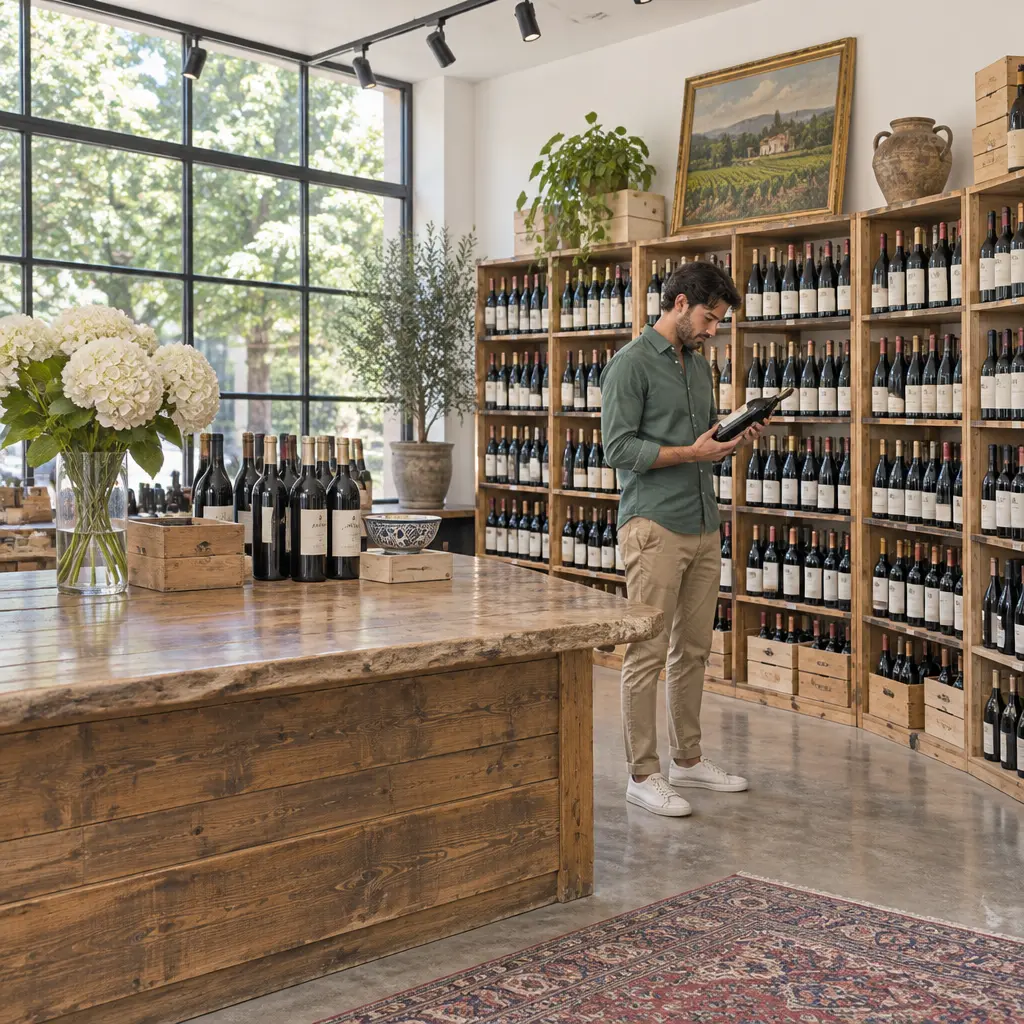
Wine-label literacy is the ability to interpret a bottle’s legally required statements and voluntary descriptions to estimate what is inside before opening it. Labels can offer useful clues about grape variety, origin, alcohol, sweetness, and production method, but they are not a complete guarantee of flavor: rules differ by country, and terms such as “Reserve” may have little or no regulated meaning in some places. Reading the label in sequence—origin, grape, alcohol, sweetness, and production claims—helps shoppers form a more grounded style prediction while recognizing its limits.
Regulatory Language Defines Wine-Label Literacy
Wine-label literacy means understanding what label statements legally require, what they suggest, and what they do not establish. The U.S. Alcohol and Tobacco Tax and Trade Bureau (TTB) regulates wine labeling under federal rules, while the European Union uses shared wine-market rules alongside protected geographic designations. These frameworks make some label information reliable—such as declared alcohol within permitted tolerances—while leaving other language, especially many marketing terms, less standardized.
The distinction matters because a label is both a compliance document and a sales tool. A grape name or protected appellation can narrow expectations; a picturesque name or “Reserve” wording may provide little dependable evidence. The International Organisation of Vine and Wine (OIV) reported global wine consumption of about 221 million hectolitres in 2023, underscoring the scale of a market where label interpretation influences everyday choices.
Mandatory declarations and voluntary claims
Mandatory declarations are information that applicable law requires on a wine label; voluntary claims are additional statements that producers may use subject to relevant rules. In the United States, mandatory information generally includes items such as brand, class or type, alcohol content, net contents, producer or bottler details, and health-warning language. A country-of-origin statement is also required, and varietal and appellation claims are governed by specific standards.
For a U.S. wine labeled with a single grape variety, TTB rules generally require at least 75% of the wine to be made from that variety. A qualifying American Viticultural Area (AVA) name generally requires at least 85% of the grapes to come from the named area. These percentages are useful evidence, not a promise that every bottle tastes alike: climate, harvest, vineyard, fermentation, and aging still shape the result.
Geographic indications and place-based rules
A geographic indication links a wine to a defined place and, depending on the system, to rules about origin, varieties, or production. In the EU, protected designations such as PDO and PGI distinguish wines under different levels of geographic and production requirements. In the United States, AVAs identify delimited grape-growing regions, but an AVA name does not by itself prescribe a particular taste or winemaking method.
Place names are therefore best read as clues about growing conditions and legal origin, not as flavor guarantees. A cool-climate region may often produce grapes with higher acidity than a hot region, but vintage variation and cellar decisions can alter that pattern. The bridge from place to style is strongest when the label also identifies the grape and the region’s recognizable climate or tradition.
Label Cues Predict Wine Style with Unequal Confidence
Style prediction is an inference from label evidence, not a regulated promise. The most useful cues are usually grape variety, origin, alcohol content, sweetness terminology where defined, and production-method statements. Marketing language and visual design sit farther from measurable wine characteristics, so they should carry less weight.
Grape variety and likely flavor profile
A varietal name identifies a dominant grape under the relevant jurisdiction’s labeling threshold and can suggest typical aromas, body, and structure. Cabernet Sauvignon often points toward a fuller-bodied red with firmer tannins; Riesling can range from dry to sweet while commonly retaining pronounced acidity; Pinot Noir often suggests a lighter-bodied red, though climate and winemaking can make it more substantial.
These are tendencies rather than guarantees. A varietal label says more about grape composition than about residual sugar, oak treatment, or extraction. When a bottle names several grapes or uses a regional blend name, the blend may be governed by local rules, but the exact proportions may not be disclosed on the front label.
Alcohol by volume as a body and ripeness clue
Alcohol by volume (ABV) states the proportion of a drink that is pure alcohol by volume. It can offer a rough clue to ripeness and perceived weight: higher alcohol may accompany riper fruit and a fuller impression, while lower alcohol can be associated with lighter styles. Yet residual sugar, acidity, carbonation, serving temperature, and winemaking also affect perceived body.
In the United States, wines at or below 14% ABV may use a numerical alcohol statement or, in certain circumstances, a “table wine” designation; wines above 14% generally require a numerical statement. The label’s ABV is therefore useful for comparison, but it should not be treated as a direct sweetness scale. A dry wine can have high alcohol, and a sweet wine can have relatively low alcohol.
Sweetness terms and residual sugar
Sweetness describes the sugar remaining in wine, commonly called residual sugar, but the vocabulary and legal definitions vary by market and wine category. Terms such as “dry,” “medium-dry,” and “sweet” are most informative where regulations define them for that product. For example, EU rules establish sweetness categories for sparkling wine, with thresholds expressed in grams of sugar per litre.
A “Brut” sparkling wine is generally drier than “Extra Dry,” despite the counterintuitive wording; “Demi-Sec” is sweeter still. These terms apply within the sparkling-wine classification and should not be assumed to map identically onto every still wine. If sweetness is central to the purchase, check the wine’s technical sheet or producer information when the label alone is ambiguous.
Production terms: oak, sparkling method, and aging
Production terms describe choices that can materially influence texture and aroma. “Traditional method” on sparkling wine indicates a secondary fermentation in the bottle under applicable rules; “tank method” generally refers to secondary fermentation in a pressurized tank. “Barrel-aged” signals contact with a barrel, but the label may not disclose barrel size, age, wood type, or time in oak unless the producer provides those details.
Aging statements can also be jurisdiction-specific. In Spain, terms such as Crianza, Reserva, and Gran Reserva are tied to category rules and minimum aging requirements, with details varying by wine type and current regulations. In other markets, “Reserve” may be a producer’s branding rather than a standardized quality grade. Always interpret the term in the context of its origin and governing rules.
Label Literacy Separates Regulated Facts from Marketing
The most important practical skill is ranking claims by evidential strength. A legally defined origin or production category is generally more dependable than a tasting adjective, while a label design or prestige-sounding word may communicate positioning rather than measurable quality. This distinction prevents consumers from confusing attractive language with a guaranteed sensory outcome.
Terms with standards and terms with weaker meaning
Some phrases have legal or technical definitions in particular places; others have no universal definition. “Organic,” for example, is subject to certification and production rules in many jurisdictions, although the exact requirements differ. “Estate bottled” has a specific TTB meaning in the United States, including requirements concerning grape growing, winemaking, and bottling under the estate’s control.
By contrast, “Reserve,” “Old Vine,” and “premium” do not have one global standard that guarantees a particular age, vine history, or quality level. A producer may use such wording meaningfully within its own range, but shoppers should seek a clear legal definition or producer explanation before treating it as comparable across brands.
Vintage, provenance, and limits of inference
A vintage is the year the grapes were harvested, and its significance depends on region, weather, and wine style. In the United States, a vintage-date wine generally must derive at least 95% of its grapes from the stated year when it also bears an appellation of origin; different requirements can apply without an appellation. EU vintage-labeling rules likewise set conditions, including a general 85% threshold for the stated year.
Vintage can help explain variation between bottles from the same region, but it is not a simple quality ranking. A challenging growing season may produce excellent wines from careful producers, while a widely praised vintage does not ensure that every bottle suits an individual preference. Provenance is strongest when the label gives a specific place and the producer supplies transparent production details.
A Practical Method Turns Label Clues into a Style Prediction
A fast, repeatable reading order reduces guesswork: identify the wine category, locate the grape or blend, note the region and vintage, check ABV and sweetness language, then interpret production claims. Treat each clue as a probability rather than a promise, and give more weight to regulated information than to promotional phrasing.
A five-step bottle-read
- Identify whether the wine is still, sparkling, fortified, or another category.
- Find the grape variety or blend and consider its typical structure.
- Read the origin and vintage as context for climate and harvest conditions.
- Use ABV and any legally meaningful sweetness term as supporting clues.
- Check aging and production claims, then discount vague marketing language unless the producer defines it.
For example, a bottle identified as Riesling from a cool-climate region with modest ABV may suggest a crisp style, but it does not establish that the wine is dry. A sparkling wine marked Brut offers a more direct sweetness clue under the relevant category rules. A red labeled with a specific grape, warm region, and higher ABV may suggest ripe fruit and greater weight, while leaving oak and tannin intensity uncertain.
Use technical sheets to resolve uncertainty
When the label does not answer a key question, a producer’s technical sheet may list residual sugar, acidity, fermentation vessel, maceration, oak regime, and blend percentages. These details make predictions more precise, especially for sweetness-sensitive purchases or wines whose front labels emphasize branding over composition. Retail staff and importer notes can add context, but their claims should be distinguished from legally required label statements.
A useful visual aid would be a “confidence ladder” chart: highest confidence for legally defined composition and origin claims; moderate confidence for ABV, vintage, and production-method statements; lower confidence for broad tasting notes; and lowest confidence for unstandardized promotional terms. The ladder reminds readers that not every label clue deserves equal interpretive weight.
Conclusion: Label Literacy Improves Style Prediction
Wine-label literacy combines knowledge of regulatory language with practical interpretation of grape, place, ABV, sweetness, vintage, and production claims. Regulations make some details dependable, while regional differences and undefined marketing terms limit what a label can prove. The most accurate pre-opening prediction comes from combining several clues, checking the rules that apply to the wine’s origin, and treating style expectations as informed estimates rather than guarantees.
For a stronger next step, compare labels with producer technical sheets and tasting notes after opening, recording which clues were useful. Over time, that habit builds personal calibration and helps shoppers make more confident choices without mistaking regulatory compliance or premium-sounding language for a promise of flavor.
Sources: Alcohol and Tobacco Tax and Trade Bureau, Wine Labeling: COLAs Online and Labeling Regulations, https://www.ttb.gov/labeling; Alcohol and Tobacco Tax and Trade Bureau, 27 CFR Part 4—Labeling and Advertising of Wine, https://www.ecfr.gov/current/title-27/chapter-I/subchapter-A/part-4; European Commission, Wine, https://agriculture.ec.europa.eu/farming/crop-productions-and-plant-based-products/wine_en; European Commission, Geographical Indications and Quality Schemes Explained, https://agriculture.ec.europa.eu/farming/geographical-indications-and-quality-schemes/geographical-indications-and-quality-schemes-explained_en; International Organisation of Vine and Wine, State of the World Vine and Wine Sector in 2023, https://www.oiv.int/what-we-do/statistics; European Commission, Commission Delegated Regulation (EU) 2019/33, https://eur-lex.europa.eu/eli/reg_del/2019/33/oj; Consejo Regulador DOCa Rioja, Rioja Wine Classification, https://riojawine.com/en/